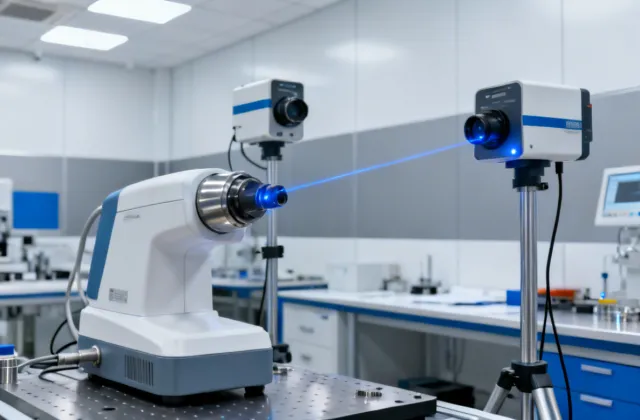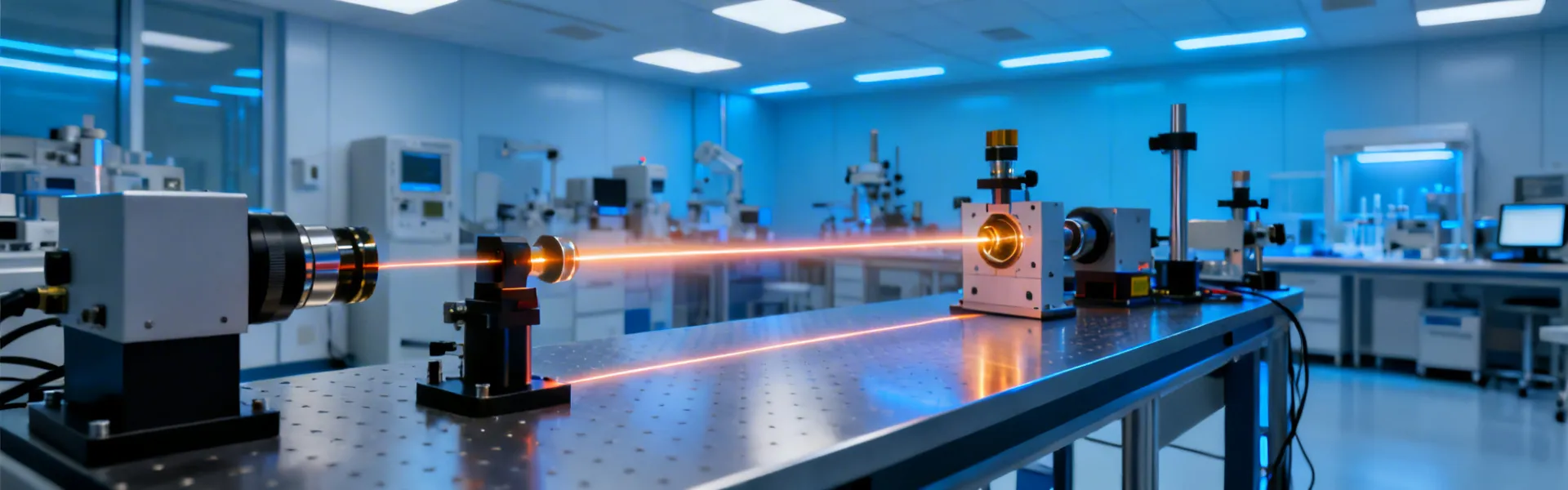
The physics of laser-tissue interaction determines clinical outcomes. Understanding how wavelength, pulse duration, fluence, and spot size affect target chromophores is the foundation of effective aesthetic laser treatment.
Every laser treatment relies on selective photothermolysis — the principle that a specific wavelength of light is preferentially absorbed by a target chromophore (hemoglobin, melanin, ink particles, water) while minimizing absorption by surrounding tissue. Cutera platforms deploy four wavelength families, each selected for its absorption profile against specific clinical targets.
The workhorse wavelength of medical aesthetics. 1064nm Nd:YAG penetrates 4-6mm into tissue, targeting deoxyhemoglobin in deep vascular structures and melanin in hair follicles. Lower epidermal melanin absorption makes it safe across all skin types (Fitzpatrick I-VI). Used in the xeo, excel V+, CoolGlide, and enlighten platforms.
Frequency-doubled Nd:YAG producing green 532nm light with peak absorption in oxyhemoglobin. Targets superficial vascular lesions at 0.5-2mm depth — telangiectasias, rosacea, cherry angiomas. Also effective for epidermal melanin targets (lentigines, sun spots) and red/orange tattoo inks. Used in the excel V+ and enlighten platforms.
The 670nm wavelength in the enlighten III fills a critical gap in the tattoo removal spectrum. Blue and green ink pigments — which absorb poorly at both 532nm and 1064nm — have peak absorption near 670nm. This wavelength eliminates the need for a separate Alexandrite or Ruby laser to clear these resistant colors. Exclusive to the enlighten III platform.
The Pearl platform's 2790nm erbium-doped fiber laser targets water in tissue, the dominant chromophore for ablative and fractional resurfacing. At this wavelength, the absorption coefficient in water provides controlled ablation depth with a predictable zone of thermal coagulation. The result is surface-level resurfacing with dermal collagen induction.
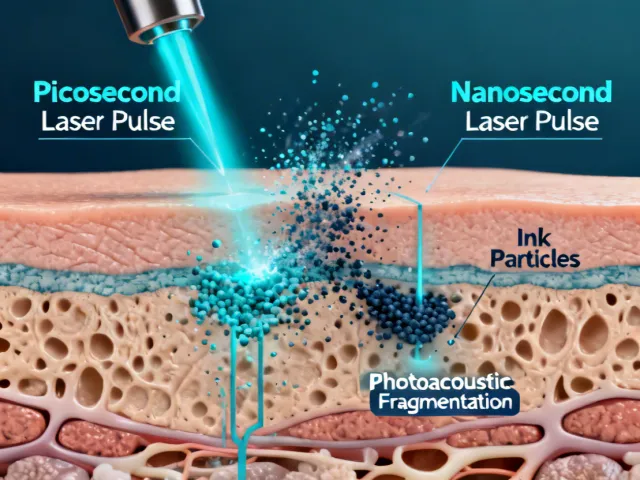
The thermal relaxation time (TRT) of a target determines the optimal pulse duration for effective treatment. Tattoo ink particles have TRTs in the nanosecond to sub-nanosecond range. Conventional Q-switched nanosecond lasers deliver energy faster than the TRT of large particles but may exceed the TRT of smaller fragments, causing thermal diffusion rather than photoacoustic fragmentation.
The enlighten III delivers true picosecond pulses (750ps at 1064nm, 660ps at 532nm) — shorter than the TRT of residual ink fragments that nanosecond pulses leave behind. This photomechanical mechanism generates pressure waves that shatter small particles more efficiently. The dual pulse-width capability (picosecond and nanosecond in the same device) allows practitioners to select the optimal mode for each treatment phase: nanosecond for initial bulk fragmentation, picosecond for residual fine particles in later sessions.
The laser source is only one component in a treatment system. How energy is delivered to tissue — beam profile, spot geometry, fluence monitoring, and thermal management — determines whether theoretical wavelength advantages translate into actual clinical outcomes.
Cutera's laser beam delivery systems use proprietary optics to produce a flat-top beam profile rather than the Gaussian distribution common in simpler systems. A flat-top profile delivers uniform fluence across the entire spot area, eliminating the "hot center" that causes variable treatment depth and increased risk of adverse effects. Beam uniformity is verified during the 52-point factory calibration using a beam profiler at the working distance of each handpiece.
The excel V+ incorporates a real-time dosimetry system that measures delivered fluence at the handpiece window — not at the laser source. This accounts for optical path losses that simple systems do not monitor. If tissue contact pressure varies during treatment (which is inevitable in clinical practice), the system adjusts pulse parameters to maintain target fluence. Practitioners see actual delivered energy per pulse, not just the commanded output of the laser source.
Epidermal protection during 1064nm Nd:YAG treatment requires active cooling to prevent thermal damage to non-target tissue. Cutera employs two approaches: sapphire contact cooling (CoolGlide, excel V+) provides continuous conductive heat extraction through a chilled sapphire window in direct skin contact, and parallel air cooling supplements thermal management during high-repetition-rate treatments. Unlike cryogen spray systems, sapphire contact cooling operates without consumable cartridges and provides more uniform thermal extraction across the treatment area.
No single laser technology is optimal for every clinical scenario. Understanding the genuine trade-offs between different approaches helps practitioners make informed capital equipment decisions. Cutera publishes this comparison because we believe transparent information leads to better purchasing decisions than marketing claims.
| Parameter | Nd:YAG (1064nm) | Alexandrite (755nm) | Diode (810nm) | IPL (Broadband) |
|---|---|---|---|---|
| Skin Type Safety | Fitzpatrick I-VI (all types) | Fitzpatrick I-IV only | Fitzpatrick I-V (limited VI) | Fitzpatrick I-IV only |
| Penetration Depth | 4-6mm (deepest) | 2-3mm | 3-4mm | 1-3mm (variable) |
| Hair Removal Efficacy (Light Skin) | Good — requires higher fluence | Excellent — gold standard for I-III | Very good | Moderate |
| Hair Removal Efficacy (Dark Skin) | Best available option | Contraindicated (V-VI) | Limited (V), contraindicated (VI) | Contraindicated (V-VI) |
| Treatment Speed (Large Areas) | Moderate (10mm spot max) | Fast (18mm spot available) | Fast (large spot available) | Very fast (large window) |
| Capital Cost Range | $80,000 - $160,000 | $70,000 - $130,000 | $30,000 - $100,000 | $20,000 - $80,000 |
| Per-Treatment Consumable Cost | Minimal (solid-state, no tube) | Minimal (solid-state) | Minimal (solid-state) | Lamp replacement ($2,000-$5,000/100k pulses) |
If your patient population is predominantly Fitzpatrick I-III and your primary indication is hair removal, an Alexandrite system may offer faster treatment times at a lower capital cost than Nd:YAG. Cutera's Nd:YAG platforms are engineered for practices that need all-skin-type versatility and multi-indication capability from a single system. The honest evaluation is whether your practice volume and patient demographics justify the broader capability or whether a single-indication system would serve you more cost-effectively. Our clinical applications team provides this analysis without obligation.
Every Cutera system undergoes a 52-point optical calibration before shipping from our Brisbane, California manufacturing facility. This protocol verifies beam uniformity, spot size accuracy, fluence output at the handpiece window, pulse width consistency, and cooling system performance across the operating parameter range of each installed handpiece.
The calibration data is recorded and associated with the system serial number. During annual field service, the same protocol is repeated and compared to baseline values. If any parameter drifts outside specification, the system is adjusted and recertified before returning to clinical use. This approach — measuring what actually reaches the patient rather than what the laser source generates — ensures treatment parameters remain consistent over the life of the system.
Laser technology is only as effective as the practitioner operating it. Cutera invests in structured clinical education to ensure practitioners achieve optimal outcomes from the first treatment day.
Site requirements review, electrical and ventilation specifications, treatment room layout optimization, and regulatory compliance documentation before equipment arrives.
Cutera clinical educator conducts hands-on training covering device operation, parameter selection for each indication, patient selection criteria, consent documentation, and safety protocols.
After initial training, clinical applications specialists are available for parameter consultation on complex cases, combination treatment protocol design, and advanced technique guidance via the Cutera Learning Center.
Annual calibration and preventive maintenance. Firmware and software updates. Technical phone support with average response under 4 hours. On-site service within 48 hours for critical issues in covered regions.
Each Cutera platform represents a specific generation of laser engineering. Understanding when each system was introduced and what it delivers helps practitioners evaluate technology maturity and expected performance.
| Platform | Introduced | Wavelength(s) | Pulse Duration | Key Indications | Price Range |
|---|---|---|---|---|---|
| CoolGlide | 2000 | 1064nm Nd:YAG | 10-100ms (long pulse) | Hair removal (all skin types), leg veins | Contact for pricing |
| xeo | 2004 | 1064nm Nd:YAG (multi-handpiece) | 0.1-300ms (variable) | Hair removal, Laser Genesis, vascular, skin revitalization | $80,000 - $150,000 (configuration-dependent) |
| excel V | 2008 (V+ upgrade: 2022) | 532nm KTP + 1064nm Nd:YAG | 0.3-50ms (variable dual) | Vascular lesions, pigmented lesions, rosacea | $90,000 - $160,000 |
| enlighten III | 2017 | 1064nm + 532nm + 670nm | 750ps / 2ns (dual mode) | Tattoo removal (all colors), PICO Genesis skin | $120,000 - $200,000 |
| Pearl / Pearl Fractional | 2009 | 2790nm Erbium fiber | Controlled ablation pulse | Skin resurfacing, photodamage, wrinkles | Contact for pricing |
Price ranges represent approximate U.S. list prices as of 2024 and vary based on configuration, handpiece selection, and service contract terms. Pre-owned and certified refurbished systems are available at lower price points. Contact Cutera or an authorized distributor for current pricing specific to your configuration requirements.
Request a detailed technical briefing on Cutera laser wavelength science, beam delivery engineering, and clinical evidence for your specific indications. Our team provides objective, data-backed information to support your capital equipment evaluation.