FDA 510(k) Cleared Laser Systems — Trusted by 15,000+ practitioners in 80+ countries. Schedule a Consultation
Cutera Laser clinical treatment solutions
Clinical Solutions

Cutera Laser Genesis & Clinical Treatment Solutions

Evidence-based treatment protocols matched to specific dermatologic and aesthetic indications. Each protocol is developed from published clinical data and refined through our application laboratory's experience with over 15,000 installed systems worldwide.
Cutera excel V+ vascular laser treatment
Vascular Treatment

Vascular Lesion Management

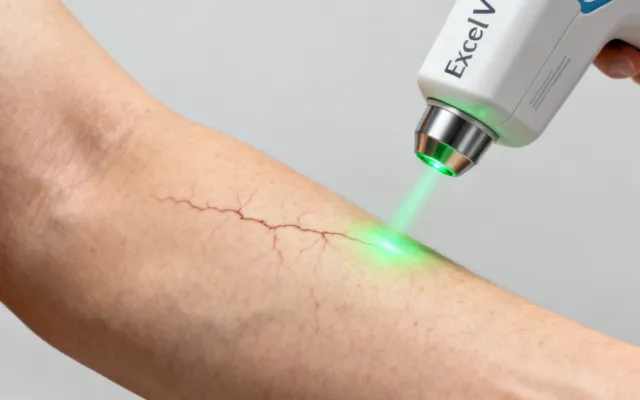
The excel V+ addresses the full spectrum of vascular conditions through dual-wavelength precision. The 532nm KTP wavelength targets oxyhemoglobin in superficial vessels — telangiectasias, cherry angiomas, and superficial rosacea — with controlled thermal coagulation. The 1064nm Nd:YAG reaches deeper vascular structures including reticular veins and port wine stains at depths up to 5-6mm.

Real-time dosimetry monitors fluence delivery pulse-by-pulse, automatically adjusting energy output to maintain consistent treatment parameters across varying tissue contact pressures. A 2019 multicenter study by Bernstein et al. published in Dermatologic Surgery (Vol. 45, Issue 11, pp. 1410-1418) reported 80-95% vessel clearance rates for facial telangiectasias after 1-3 treatment sessions across 218 subjects, with the highest clearance rates observed in vessels <0.5mm diameter. However, deeper reticular veins (>2mm diameter) may require 3-5 sessions, and telangiectatic matting — where new fine vessels develop around the treated area — occurs in approximately 5-8% of patients.

  • Dual wavelength: 532nm KTP + 1064nm Nd:YAG
  • Real-time dosimetry with automatic fluence adjustment
  • Green Genesis mode for diffuse redness (rosacea)
  • Sapphire contact cooling for epidermal protection
Request Clinical Data
Cutera CoolGlide laser hair removal treatment
Hair Removal

Nd:YAG Hair Reduction for All Skin Types

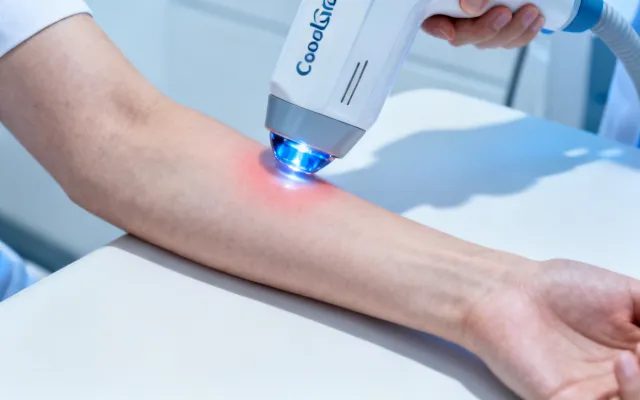
The CoolGlide system uses 1064nm Nd:YAG energy to target melanin in hair follicles while bypassing epidermal melanin, making it the only Cutera wavelength FDA-cleared for permanent hair reduction across all Fitzpatrick skin types (I-VI). This distinction matters: shorter-wavelength systems (755nm Alexandrite, 810nm diode) are contraindicated or limited in darker skin due to competitive absorption by epidermal melanin, risking hypopigmentation or burns.

The integrated sapphire contact cooling window provides continuous epidermal protection during treatment, eliminating the need for external cooling devices or topical cryogen application. The large spot size (up to 10mm) enables rapid coverage for large treatment areas including full back and full legs, reducing session times compared to smaller-spot competitors.

  • 1064nm Nd:YAG — safe for Fitzpatrick skin types I-VI
  • Integrated sapphire contact cooling
  • Large spot sizes for rapid area coverage
  • No consumable cryogen cartridges required
Request Treatment Protocol
Cutera enlighten III tattoo removal treatment
Tattoo Removal

Picosecond Technology for Multi-Color Tattoo Clearance

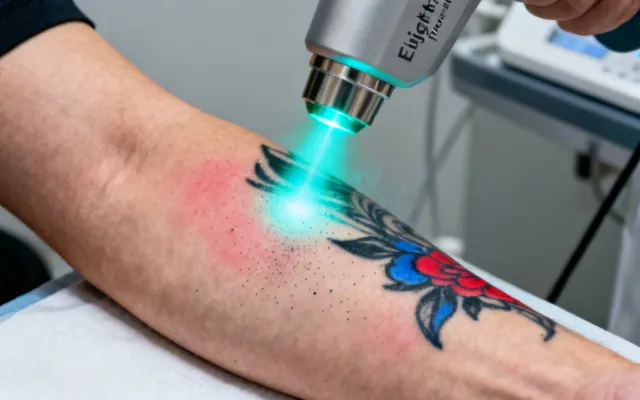
The enlighten III is Cutera's three-wavelength picosecond and nanosecond platform, designed specifically for the challenge of modern multi-color tattoos. The 1064nm wavelength clears dark inks (black, dark blue), 532nm targets red and orange pigments, and the 670nm wavelength — unique to the enlighten platform — addresses resistant blue-green inks that are notoriously difficult for dual-wavelength systems.

Dual pulse-width technology (picosecond and nanosecond) allows practitioners to match pulse duration to ink particle size. Picosecond pulses fragment smaller particles that nanosecond systems leave behind, reducing the average number of treatment sessions needed for near-complete clearance. A 2020 multicenter study by Khoury et al. published in Lasers in Surgery and Medicine (Vol. 52, Issue 4, pp. 340-349) documented 75% clearance of professional multicolor tattoos in an average of 6 sessions (n=142 subjects) — compared to 10-15 sessions reported for Q-switched nanosecond systems in the 2016 Kirby et al. meta-analysis (Journal of the American Academy of Dermatology, Vol. 75, Issue 6). Important limitation: tattoos with predominantly yellow, white, or flesh-toned inks respond less predictably to all available laser wavelengths, including the 670nm, and may require adjunct treatment approaches.

  • Three wavelengths: 1064nm, 532nm, 670nm
  • Dual pulse-width: picosecond + nanosecond
  • Treats all common ink colors including blue-green
  • Reduced average treatment sessions vs. nanosecond systems
Request Clinical Evidence
Cutera Laser Genesis skin revitalization treatment
Skin Revitalization

Laser Genesis: Non-Ablative Collagen Remodeling

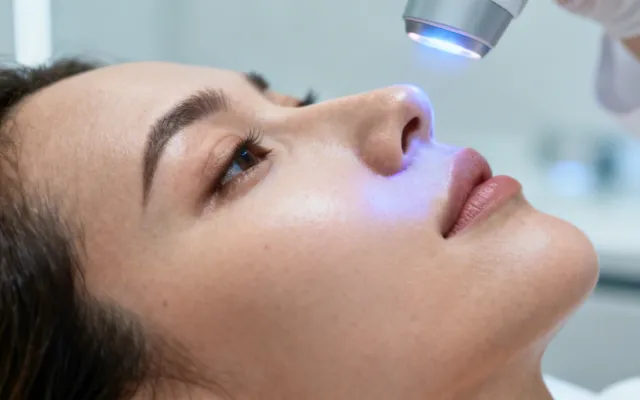
Laser Genesis delivers hundreds of sub-therapeutic micro-pulses of 1064nm Nd:YAG energy per second to uniformly heat the papillary dermis to 42-44 degrees Celsius, stimulating new collagen synthesis without epidermal disruption. The result is a no-downtime treatment that progressively improves skin texture, reduces pore size, and diminishes diffuse redness over a series of sessions.

The treatment protocol is typically 4-6 sessions at 2-4 week intervals, with cumulative improvement documented through spectrophotometric erythema measurements and standardized photography. Laser Genesis is frequently combined with other Cutera modalities — the excel V+ for targeted vascular lesions or the enlighten for pigment — in a comprehensive skin quality improvement protocol that dermatologists refer to as a "layered approach."

  • Non-ablative 1064nm micro-pulse technology
  • No anesthesia, no downtime, no consumables
  • Cumulative collagen remodeling over multiple sessions
  • Combinable with vascular and pigment modalities
Request Protocol Information

Identify the Right Protocol for Your Practice

Share your primary treatment indications and patient demographics. A Cutera clinical applications specialist will recommend appropriate platform configurations and provide treatment protocol documentation with published clinical references.